March 24, 2011

Anonymousey

There have always been people who feel that the hard-won right to Freedom of Speech entitles them to be as insulting or hurtful towards others as they like. Sometimes they are sufficiently proud of their "candour" that they are happy for their identities to be known, but the more craven or cautious among them have always hidden behind anonymity.
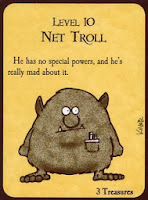
In previous times, the anonymous "poison pen" letter was used to attack, frighten or villify someone, and was usually rude, insulting, or downright malicious about a person's life or character.
In the case of my own thoughts and opinions as expressed in this blog, one of the posts which has attracted the strongest response (as I expected it would) is "DMOZ Editor Corruption Shock". However, that post is now almost two years old, and has been updated twice since then (in August 2009 and July 2010), but I continue to receive nasty comments on the original post, obviously by people who have not noticed that it is now rather dated.

I do not censor sensible comments, even if I disagree with their content, or even if the writer wishes to hide his/her identity. But in my view (and it is my blog, after all) I don't see any value to anyone in publishing anonymous rants which are usually pointless and frequently illiterate.

Of course I have experienced my share of hurtful criticism in several areas of my life, some of which was undoubtedly justified, but I absolutely refuse to take seriously the accusations and criticisms of
  • those who abuse a position of authority to belittle people "beneath" them
  • bullies of any type 
  • those who are purely self-interested (ie with their own unacknowledged and unrelated agenda)
  • those who have shown themselves to be deceitful or manipulative
  • ... and certainly those who send anonymous "hate mail" or blind criticism  
So, Mr/Ms "Anonymous", if you wish me to take note of your emails or publish your comments, please ensure they indicate some thought on your part, are relevant to the issue in question, contain at least one original opinion or observation, and are written with some semblance of grammar and syntax, rather than being just a string of miss-spelled invective.
If you can't manage that, save yourself the time.

February 27, 2011

Deconstructive Criticism

To my disappointment, the title is not a witty neologism, but a long-standing (if terminally obscure) literary term. I tried hard to understand the definition, really I did, but in the end I still prefer my own:
"Deconstructive criticism is the opposite of constructive criticism"

"But surely the opposite is 'unconstructive' or even 'non-constructive'?", you might say.
No. In my mind those are terms for criticism which does nothing at all, neither helpful nor damaging:

For me, construction means putting things together, so the opposite should be "deconstruction", or taking things apart. Not destruction, you understand, which means destroying, but more the dismantling of something which has been built.

Now that we have my definitions sorted out, how does this apply to criticism? Some examples might help.

Example 1
Constructive criticism: "You have obviously worked hard on this, but I notice a few things which could be improved. Perhaps we can work on them together?"
Unconstructive criticism: "I don't like the way you've done this."
Destructive criticism: "What a mess you've made, as usual."
Deconstructive criticism: "You've spent way too much time on this, and you still haven't got it right."
Example 2
Constructive criticism: "I know how much you like that colour, but I'm not sure it's the best choice this time."
Unconstructive criticism: "I don't like that colour at all."
Destructive criticism: "You have never had any colour sense."
Deconstructive criticism: "What on earth makes you think that colour combination works?"
Example 3
Constructive criticism: "I appreciate your point of view, but I see things differently. Can we talk about it some more?"
Unconstructive criticism: "I totally disagree."
Destructive criticism: "You always get things wrong."
Deconstructive criticism: "Where on earth did you get that idea? It's completely ridiculous."
Example 4
Constructive criticism: "You have a wonderful way with words, but I think your point might be lost in the detailed explanation you provide."
Unconstructive criticism: "I have absolutely no idea what you mean."
Destructive criticism: "You always bore everyone to death."
Deconstructive criticism: "Why can't you just use simple language instead of this rubbish?"
Example 5
Constructive criticism: "You devote so much time and effort to this company/project/organisation, but perhaps it might be time to take a step back and re-assess priorities?"
Unconstructive criticism: "Nobody should spend as much time as you do on this."
Destructive criticism: "You are not nearly as useful as you seem to think you are.
Deconstructive criticism: "Most of what you've done is completely unnecessary, and the rest has to be checked and corrected anyway."

I hope you can get a sense of the demoralising effect of deconstructive criticism, which is a more personal attack on your own values and abilities, and therefore harder to ignore, than the obvious generalisations of the other two negative responses.
In other words, deconstructive criticism is nothing more than a deliberate insult, and like all insults says more about the person delivering it than the one to whom it is addressed.  Criticism is an essential component of growth and development, but only if it is constructive. Accept no substitutes! 

January 26, 2011

Several Gains ... and a Pain

Some You Win
My new-found passion for researching my family history continues apace, and like many other amateur genealogists I am finding that the frustrating dead ends and missing connections are well compensated by serendipitous discoveries.
The biggest challenges I face are that not only are most people from my parents' generation long gone (and therefore unable to identify piles of tantalisingly unlabelled photographs), but I am largely unacquainted with even the close relatives of my own generation. I am delighted to say that this is gradually being remedied. Thanks to the scary internet, I have tracked down several of my previously unknown first cousins, and in most cases they have been as excited as myself to make the connection. The fact that a couple of them live in the same city as me is astonishing, seeing our families originated 2000 miles away.
I have not yet discovered anyone particularly famous or infamous perched in my family tree, but I am proud to report that my direct ancestors and current first-degree relatives have the following accomplishments to their credit:

  • pioneer farmers who established large sheep properties in arid bushland
  • schoolteachers who opened the first schools in their areas
  • the introduction of the practice of "dipping" sheep for protection against parasites
  • the first mayor of a now-famous town
  • an internationally recognised musician and an even more well-known artist
  • numerous brave soldiers in the two World Wars
  • a nurse who endured malaria and dysentery to treat soldiers in WW I
  • a pioneering news journalist and broadcaster
  • an extraordinarily generous (but very private) philanthropist

Some You Lose
It's always sad to witness the deliberate destruction of something which means a lot, and the ongoing implosion of the once-great Open Directory Project has been painful to watch. I have my own theories about when and how this started, but even non-editors have been able to see the disastrous effects of the misguided and incredibly inept DMOZ 2.0 "upgrade" last August.
Like thousands of other DMOZ editors I was forced to abandon my role as the whole infrastructure and editorial process disintegrated in front of our horrified gaze. Of course we were continually assured that such "glitches" were only to be expected after a major system upgrade, and that normal functions would soon be restored. We wanted so badly to believe that, but the gurgling sound was growing louder.

After more than a month things were barely any better, editing was still unworkably bug-ridden, data was still being lost, and impatience was growing. The repeated reassurances from ODP management sounded more optimistic than realistic by then, but many of us kept hoping they would eventually make things right. I decided to leave them to it for a few months, rather than experiencing daily exasperations about all the new bugs being discovered. So I was astonished to return to do some editing the other day, almost six months after the "upgrade", only to find that not only are most of the basic editing functions still not working properly, but that even the high level reassurances have not been updated in all that time!

Apparently not just the actual working editors, but even those who manage DMOZ have given up and lost interest.
Having been an enthusiastic and dedicated ODP volunteer for many years, it has been very sad indeed for me to watch the directory come to such an inglorious end, and I am sure many many other editors feel the same. The fact that it happened as the result of deliberate actions and decisions by those in authority makes it even more distressing, but we are (and always were) at the mercy of those whose positions of power are not accompanied by either aptitude or altruism.

LinkWithin

Related Posts with Thumbnails